Technology Advisory for Veterinary Practices
A Practice Information Management System, in-clinic analyzers, imaging, external reference lab connections, the client interface your team answers on, and one internet circuit holding all of it together. Elk Run works across all of it, because problems in a practice almost never stay inside one vendor's box.

Our job is making the technology side of your practice run better.
Veterinary technology is the whole practice here.
Built on years in vet clinics combined with years in tech. Vets trained for medicine, not IT, and that gap shows up differently depending on the size of the practice.
A single-owner practice is running lean. Nobody on staff has time to also become an expert in networks, integrations, and now AI, on top of practicing medicine. A multi-site group carries the same gap at a larger scale. Every hospital it has acquired arrived with its own PIMS, its own network, and its own habits, none of it built to work together, so integration has to compete with just keeping everything running.
AI sits on top of both problems, because it needs clean, unified data to be useful, and neither a stretched single practice nor a stitched-together multi-site group has that yet. Even the network underneath is usually inherited rather than chosen, built by whoever was there before anyone was thinking about scale.
The systems in your building are familiar before we walk in:
- Client interface (phone, text, email)
- Your Practice Information Management System
- The in-clinic analyzers feeding it
- Imaging and the storage behind it
- External reference lab connections
- The network carrying all of it
- Security across the whole thing
Most providers know one slice of that well. The network company does not know what happens inside the PIMS when the connection to the server drops at eleven in the morning. The software reseller does not own the circuit. We work across the entire infrastructure because the failures do not respect the lines between vendors.
Does this sound like you?
None of this is unusual. It is what happens when systems get added one at a time, each one solving the problem in front of it.
The phone system is its own island.Calls arrive on hardware that does not talk to the record, so nothing said on the call is written down anywhere else. Voicemail sits in a second place nobody checks on a schedule, and a callback depends on whoever picks up the sticky note.
Someone retypes what the client just told you.Address, callback number, reason for the visit, all keyed in by hand, and one transposed digit sends the reminder nowhere.
A lab result takes three phone calls.The client calls, the doctor is in surgery, the callback misses, the client calls again, and a two minute conversation takes a day and a half.
Proactive outreach depends on someone remembering.Three day rechecks and refill reminders happen when a staff member has a free minute, which is not a schedule.
The front desk is covered part of the week.Two and a half days of reception, and the rest of the week the phone gets answered by whoever is closest to it.
You pay monthly for a texting platform that sits beside the record instead of inside it.Two schedules that disagree, and staff checking both.
If more than two of those landed, the problem is not any one system. It is that nothing between them was ever designed to work together.
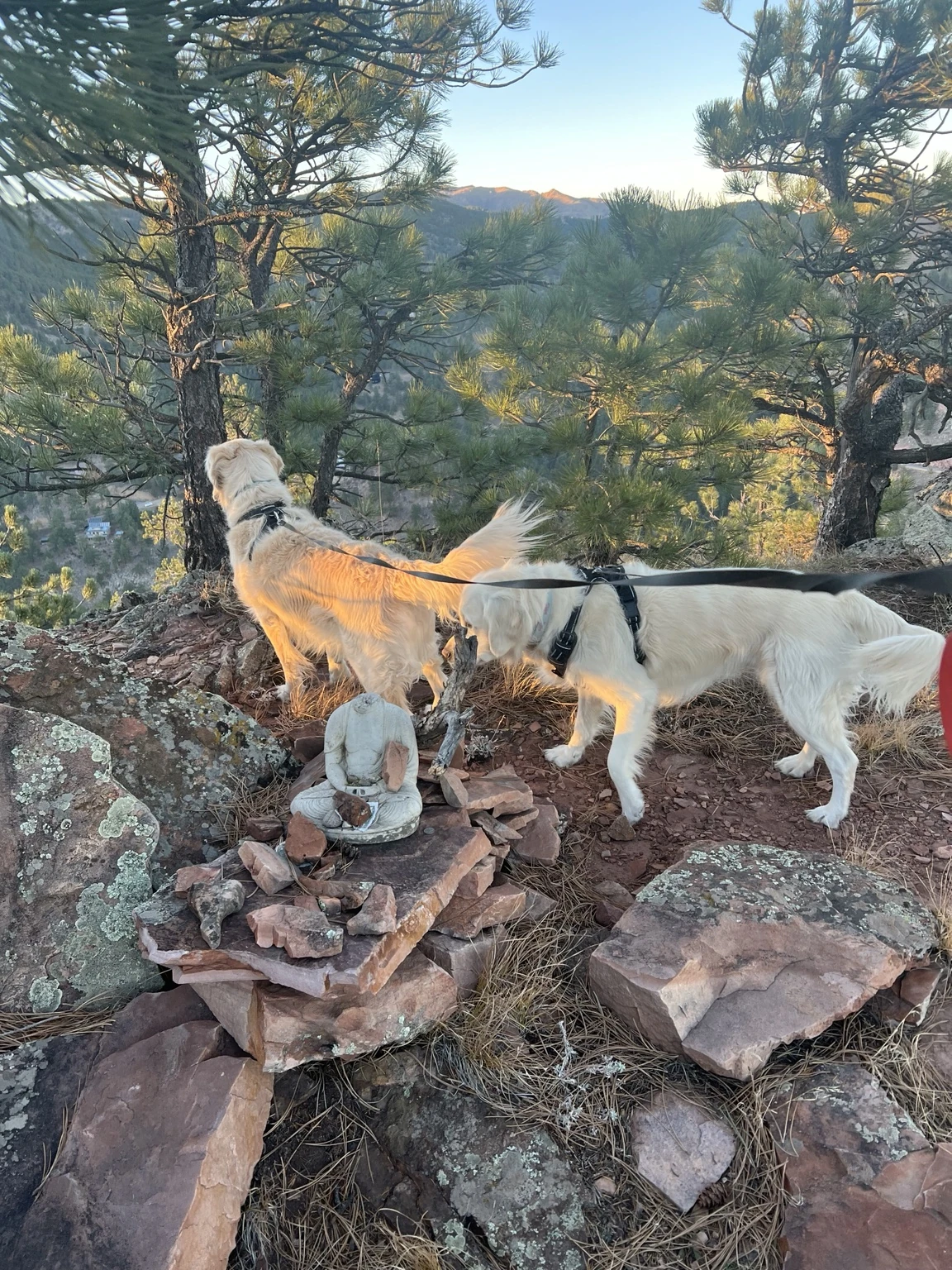
The practice runs in the background. The goldens noticed.
Three areas, in order
Network first, then client engagement, then data security. Each step depends on what the one before it found, and a failure in one rarely stays there. When the network goes down, the PIMS goes with it.
Your PIMS is moving to the cloud, or already did
Network bandwidth, continuity, and availability are more critical than ever.
Every client question turns into a callback nobody is tracking
You have backups, but nobody has ever restored one
Network Assessment
This step establishes what is actually on the network and who can see it. Not the diagram from the last install. The live topology, the vendors touching it, and whether anyone gets an alert when something drops.
Inspect the network
- Circuit count, bandwidth, and whether a real failover path exists
- How analyzers and imaging modalities are addressed, segmented, and reachable
- Wireless coverage in treatment, surgery, and the kennel runs
- Which vendors hold standing remote access into the practice network
- Whether anyone watches the firewall, switches, and access points daily
- What the current circuit costs against what it actually delivers, and what the same money buys today.
Most common finding
One circuit and no failover, on a vendor most people do not even remember choosing, selected without knowing what other options existed.
When the PIMS moves to the cloud, the internet circuit stops being an office utility and becomes clinical equipment. A practice will keep a spare centrifuge in the back and no spare way to reach the record.
Client Engagement Review
Every interaction with the client is an opportunity to impress. Each one should add value to both the hospital and the client, and none of them should have to be repeated.
Measure the handoffs
- How a client question gets answered, and how many touches it takes to close the loop
- Who answers after hours and what the emergency message tells clients
- Whether texting, reminders, and booking write back into the PIMS
- Reminder performance for vaccines, rechecks, and chronic medication refills
- Where online booking requests land and who works that queue
Most common finding
A texting and reminder platform the practice pays for monthly, running beside the PIMS instead of inside it, with two schedules that disagree.
Most hospitals are not using the latest technology. AI is poised to revolutionize this space, and most veterinary hospitals do not yet know how to engage with it.
Unanswered calls are the metric everyone reaches for, and they are the smallest part of it. The cost sits in the back and forth. The callback that misses, the recheck nobody got to, the client who called twice to get one answer. That work is real, it is usually assigned to a person rather than a system, and it never shows up on a report.
Data Security Review
This step is about recovery, not policy. Backups are easy to buy and hard to verify. The question is whether the practice could be seeing patients again the same day.
Test the recovery
- Whether the PIMS database backup has ever been restored and opened
- Where imaging and PACS studies live, and how long they are kept
- Whether one ransomware event could reach the backups and the PIMS together
- Which vendors and external lab systems hold standing remote access into the network
- Who still holds logins after leaving, including relief staff and vendors
Most common finding
A backup that runs nightly, has never been restored, and sits on the same network as the PIMS server it is meant to protect.
You have backups, but has anyone ever actually tested restoring one? Find out how secure your network really is.
PCI applies the moment you take a card, and state breach notification law applies the moment client data leaves the building. The real exposure is not a fine, it is a week of paper records and a schedule you cannot rebuild.
What practices ask for once they can see the whole stack
PIMS Migration and Integration
Whether it is Cornerstone to a cloud system or two practices merging onto one database, the risk sits in the data and the interfaces, not in the software choice. We plan the analyzer links, the label printers, the external reference lab interfaces, and a full day run against the new system before go live, because a clean import report is not proof the data is right.
Multi-Site Standardization
Groups acquire faster than they integrate, so a five location group is often five different networks, three PIMS databases, and five phone systems with one logo on the door. Standardization work sets one topology, one access model, and one support path, then moves locations onto it in an order that does not interrupt surgery days.
Imaging and Storage
Radiography, ultrasound, and dental units write files that grow every year and rarely get pruned, and they usually land on whatever drive had room at the time. We map where studies are written, how they reach the record, and what a retention and storage plan looks like that does not depend on one aging computer in the treatment area.
Selecting Day to Day Support
Most practices do not need us in the building every week, they need the right local or remote provider and a written scope of what that provider owns. We define the requirements, review candidates against them, and set the escalation path so the practice manager is not the first line of response at seven in the morning.
Vendors and systems
Advisory is vendor-neutral, so nothing here is a recommendation. These are the platforms that come up most often in veterinary practices.
The challenge is rarely any one of these systems in isolation. It is making all of them work together in a building that runs on appointment time and does not have a full-time IT department.
Product and company names are the trademarks of their respective owners.
How the engagement runs
Evaluate
Two to three weeks across the three areas, in order. Network first, because everything else depends on what it finds.
Report
Written findings with a prioritized action list, separated into this month, this quarter, and this year, with an owner on each item.
Source
Where a provider needs to be replaced or added, we write the requirement, run the comparison, and settle terms before signature.
Oversee
We stay in the project through installation, cutover, and acceptance, and we escalate on the practice's behalf when dates slip.
What you walk away with
A current network diagram showing every device, circuit, and vendor connection in the building
A client engagement map tracing calls, texts, reminders, and booking from first contact to the schedule
A data and recovery report covering backup status, restore testing, imaging retention, and PCI exposure
A prioritized action list separating what to fix this month, this quarter, and this year, with an owner on each item
An understanding of the latest technology available to increase efficiencies.
Questions we get
The first conversation is a scoping call, not a pitch.
We ask what systems you run, what is not working, and what is changing this year. Then we tell you whether there is work here worth doing. If Elk Run is not the right fit for the decision in front of you, we will say so.